Categories
publishing on demand

Introducing the eBook Observer

Proboscis have commissioned me to do some research into the eBooks and how they have been used in the past by all sorts of different people and organisations. As part of the research, I created an eBook of my own – the eBook Observer – to help me conduct the interviews. I’ve already had the chance to interview a few people and will be posting profiles of cases in the coming weeks.

I’ll also be posting some of my ideas about my ongoing research on eBooks and the other resources available on Bookleteer. My personal interest on the subject of the eBooks began to take shape while conducting some research on a previous Proboscis project called Snout (read Measure Once, Cut Twice here) . It got me wondering about how people who work in cultural organisations create and disseminate information about their work. This is a particularly interesting challenge because, for the most part, the production, distribution and dissemination of information by and about arts organisations has taken-on negative connotations.

For example, there is a growing (and entirely credible) perception that publicly funded arts and creative organisations in the UK and elsewhere are facing pressure from government stakeholders and other funding bodies to “instrumentalise” and “deliver value for money” rather than focus on the work of making art. In an article entitled Auditing Culture (2004) Eleonora Belfiore claims that arts organisations “have found themselves forced to turn to the “rationalised rituals of inspection”” as the result of a “legitimacy void caused by the the erosion of cultural authority that followed the diffusion of theories of cultural relativism” (Belfirore 2004: 195). In other words, arts organisations have had to get better at generating reams of information that articulate and justify organisational aims and objectives that are consistent with the aims and objectives of stakeholders while also delivering on their promises to “be more inclusive” or “encourage audience participation”.

But the problem with this view is that this information is only generated for the benefit of funding bodies and without any meaningful ties to the actual work being done within these arts organisations. I would prefer to think about this kind of work as information practices rather than as “measuring impact” or as “providing evidence”. Once we move past framing this work within the intentions articulated by policy or funding bodies, it is possible to understand the creation and circulation of information as a practice; what Leah Lievrouw calls informing-as-praxis. That is: examining how the work of producing, distributing and interpreting information as practices in themselves are embedded within particular social, political and cultural environments and developed as part of these artists’ creative work rather than simply as an obligation to funding sources or a board of directors. I’m not arguing that the pressures that Belfiore and others have identified don’t exist, rather that these pressures are part of a more complex picture of cultural and creative practices.

The eBooks and how they are designed and used by Proboscis and their collaborators represent an interesting opportunity to take a closer look at how informing-as-praxis takes place between cultural and creative organisations. I’d be interested to hear anyone’s reactions to this approach and would love to any recommendations of authors you think might be relevant.

Categories
publishing on demand

Physical Vs Virtual Library?

Hello! I’ve been at Proboscis for just over a month now, under the Future Jobs Fund placement scheme. I’ll be contributing regularly to the Bookleteer blog during my time here, mainly topics relating to my own interests; independent literary publications and the D.I.Y attitude that inspires them.

During my research into how Bookleteer might be used in the D.I.Y publishing community, particularly zines, (independent publications with a small circulation) I stumbled across several zine libraries, collections that have been created by, donated to, or purchased by the curators. These prove to be a fascinating archive of creativity and talent, often perfectly capturing the zeitgeist at the time of publication. A zine library is an important concept, as zines are generally not designed to be preserved. Most have very small (many in the hundreds at most) one-off print runs, due to costs of production, small specific audiences, and their transitory nature.

Zineopolis, housed within the University of Portsmouth, was started after a group zine project by Illustration Degree students. Although currently only accessible by students of the university, there is a comprehensive online index, with previews of the publications.

The Women’s Library at the London Metropolitan University has a collection of zines created by women, spanning a wide range of topics, particularly feminism, and has some examples of the Riot Grrl movement.

56a Infoshop Social Centre has an archive of zines related to revolutionary politics, women, and gay issues.

These are all physical collections, and can only be read on-site, unfortunately. If these zines were scanned and uploaded to the Diffusion library as eBooks, they could be read and recreated by anyone, then recirculated, either via sending the file, or by print. Future zine creators, using Bookleteer, can offer their zine as an online eBook, sharing it with interested parties or sending to distant locales where it can be distributed, in places where large scale printing and binding is not possible or viable, or the content is hampered by censorship.

I’ll be exploring how the digital format will impact the current zine aesthetic, as well as looking at zines that are already being produced as e-books, and their reception by the community, in the near future.

Zines at Zineopolis

Categories
publishing on demand

Be2camp Brum 2010

Date: Thursday 12 August 2010
Time: 12.15 til 8pm
Place: Library Theatre, Paradise Place, Birmingham, B3 3HQ
Price: Free!

On Thursday I’ll be talking about bookeleteer at Be2camp Brum 2010. Be2camp Brum is organised by Rob Annable of Axis Design Architects and is described as “an ‘unconference’ about social media, digital tools and the built environment”.

Be2camp Brum 2010 builds on the success of Be2camp Brum 2009 which explored the relationship between digital technologies and the built environment.


Photos of Be2camp Brum 2009

Part of the agenda this year will aim to explore the possibilities for the new Library of Birmingham building and discuss how digital tools might change the way we experience a 21st century library. I’ll be talking about how bookleteer might contribute to these changes and possibilities, especially in relation to library archives.

Other speakers and topics confirmed so far are:

Speaker: Brian Gambles – Head of BCC Library Services
Introduction to Library of Birmingham Project

Speaker: TBC
Second Life and the Virtual Library of Birmingham

Speaker: TBC
Wifi, interaction design and the Physical Library of Birmingham

Paul Wilkinson & Martin Brown – Be2Camp
Be2Camp Awards – The final shortlist

Proboscis – http://bookleteer.com
Self publishing + augmented reading

Andy Hudson-Smith – http://www.digitalurban.org
http://www.talesofthings.com

Michael Kohn – SliderStudio
Democratic Design: StickyWorld

Andy Hartwell – Substrakt
Mobile & Web Apps in the Built Environment

Nick Corbett with Geoff Henderson – Urban Living & DNA
Web2.0 & Sense of Place urban design project

Nick Booth – http://podnosh.com
The Librarian at Large

James Thomson – http://www.burohappold.com
Building Information Modelling: Virtual Reality, Parametric Geometry, Google Earth

Bob Leung – Woobius
Getting your web 2.0 fix in large companies

Alison Smith – Pesky People
Disability & Digital Accessibility

Categories
examples publishing on demand

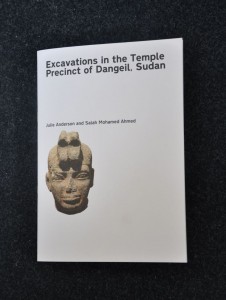
Excavations in the Temple Precinct of Dangeil, Sudan

This recently published eBook by Julie Anderson and Salah Mohamed Ahmed describes the progress of the Berber-Abidiya Archaeological Project in Dangeil, Sudan. Julie is Assistant Keeper of Sudanese and Egyptian Antiquities at the British Museum and Salah works for the National Corporation for Antiquities and Museums, Sudan and the eBook was written for a conference Julie attended. It was then printed at A5 size using the bookleteer Publish and Print on Demand. Download the A3 / Ledger PDFs here.

The eBook is full of rich details about the site in Dangeil (which sounds huge – 300x400m) and the remarkable and beautiful statues and buildings they’ve uncovered there. Intriguingly the site consists of several mounds covered with fragments of red bricks, sandstone, pot shards and plaster and each mound represents a well-preserved ancient building. It’s even possible to see traces of colour left on the stones.

As well as describing the buildings there are also fascinating insights into the rituals, food, rulers and everyday life of the temple, including the information that the Kushite language, Meoitic Meroitic, is one of the few remaining languages in the world which has not yet been translated. And running all through the book are casual glimpses into the detective work of the archeologist.

The idea is that Salah will now translate the eBook into Arabic so it can be distributed to schools around the archeological site to help them understand what’s going on and what has been uncovered. Which would be very exciting for bookleteer because that would allow us to produce our first eBook using the Arabic font and right-to-left reading that we worked so hard to include!

Categories
publishing on demand

Oh! The Places You’ll Go!

My original time for working on bookleteer was up last week so I thought I’d write a little round-up of my highlights of that time.

I set out to think about books-as-objects and explore the tangible qualities of bookleteer eBooks and StoryCubes. This gave me the perfect excuse to research and write about all kinds of paper artists who make the most fantastic books involving cut-outs and pop-ups and flip books. Then, being naturally inclined towards the technological I also looked at where electronics and paper combine and the kinds of reading experience this leads to.

It was at this point that I set about making the first pop-up eBook. Of course, this was more difficult than I first imagined (though the pop-ups were easy enough to do..) and the book is currently in an almost finished state waiting for me to be hit by inspiration on how to include the instructions without it turning into a 120-page eBook (even if that was possible!)

Next I began to wonder what all of these technological, tangible, paper pop-ups and cut-outs had in common and I came up with the idea that they all augment the reading experience – using form, movement and interaction to go beyond text. The outcome of this conceptual wandering was the Pitch Up & Publish on Augmented Reading where I met fabulous folk who were already thinking about this area and who challenged and inspired me.

So here we are… And where do we go?

Giles has asked me to do another couple of months on bookleteer so I’m currently thinking of where to take the projects I’ve begun so far. Completing the pop-up eBook is an exciting practical challenge and gives me the perfect excuse to browse more websites and blogs by paper artists. Alongside this I’m planning to explore the broader role of books-as-objects – a topic that came up in the Pitch Up & Publish. This might mean thinking about books as symbols of knowledge, identity, or markers of reading achievements. Another strand I’ll follow will look at sharing – sharing the making and sharing the reading. I’m not sure where this will go yet but if it’s anything like the last couple of months it’s going to be an interesting journey…

Categories
publishing on demand

Crowdfunded Publishing with bookleteer : a concept

Here at Proboscis we are very excited by the quality of the new PPOD service we’re offering users of bookleteer, but we also recognise that there are still economic barriers to people wanting to break into publishing their own eBooks & StoryCubes. Despite our ground-breaking service offering low-run printing (from only 50 copies per title, much lower than the industry standard of 500 or 1,000 copies) this still requires bookleteers to pay up front for printed versions of their eBooks & StoryCubes. Our aim is to open up publishing with bookleteer by removing as many of the traditional barriers as possible.

With bookleteer you can currently create shareable eBooks and StoryCubes that you can send or allow people to download anywhere in the world at no cost; you can also have high quality professionally printed & bound versions made. Our pricing for this has been set to make it as affordable as possible, so that users can sell on their printed eBooks/StoryCubes and add their own profit margin. But, for many people, the cost of printing even just 50 copies might be more than they can afford or justify on the basis of anticipated (or hoped for) future sales.

In trying to resolve the puzzle of how to allow people to use bookleteer not just to create things which they pay for, but which also allows them to earn money from their creativity, we’re now researching a concept for a crowdfunded marketplace. What we’d like to implement in the future (possibly in the beta version later this year) would be a bookleteer marketplace where the users can submit their eBooks and StoryCubes (either individually or a series / collections). We imagine that the user will set the retail price of the publication, add an ISBN number (if they have one) and set a target number of sales to be achieved before the publication will be printed via our PPOD service.

The marketplace would be public for anyone to browse and, using some kind of crowdfunding platform, pledge to buy a copy or copies of the eBooks/StoryCubes. Payments from buyers would be held in escrow until the sales threshold is reached and the printing and shipping of the publication triggered. At that point we would transfer the creator’s share of the sales to them (minus our printing & shipping costs). If there aren’t enough pledges within a given time frame to trigger the printing, then the buyer’s money would be returned to them. This approach, also called threshold pledging, would reduce the risk to both creator and buyer.

We are just at the very beginning of developing this concept and its going to require more resources and expertise than are currently available to us to actually turn into a reality – however we would really like to know what other people think of this. We’d love to hear from anyone with experience in building crowdfunding systems or using crowdfunding platforms to see if this is possible and what the average ratios are of successful to unsuccessful targets being reached.

We’d like to think that this idea could make it possible for anyone to be able to create a publication and have it professionally printed and bound without having to find the money to do so up front. With bookleteer they would be able to make the Diffusion eBook PDFs available for people to make their own handmade versions, then choose to buy the PPOD version (thereby economically supporting the creator). In this way we could create a whole new generation of publishers, crossing economic as well as cultural divides, allowing more people to find different ways of sharing their ideas, stories, knowledge, artworks – whatever they value and wish to share.

Categories
examples publishing on demand

Printed Ethnographic Notebooks

Last summer I collaborated with James Leach (Anthropology Dept, University of Aberdeen), Lissant Bolton and Liz Bonshek (Ethnographic Dept, British Museum) to help document the visit to London of two people from Reite village, Papua New Guinea – Porer Nombo and Pinbin Sisau. Porer and Pinbin had been invited to come to the British Museum to help identify and provide information about hundreds of the objects from their locality which are in the BM’s collection. It was an amazing privilege and an education to spend time with them watching how their knowledge of their world was rooted in a multi-sensory memory, triggered as much by touch as by seeing. Several eNotebooks were completed which were immediately scanned and printed to make further copies for Porer and Pinbin to take back home with them, and were published on our diffusion site.

On Sunday (June 20th) I got an email from James asking if it was possible to have some copies of the eNotebooks we made last year printed up via bookleteer’s PPOD service for him to take to Reite village on his next trip to Papua New Guinea in July. I just had to remake the scanned-in versions into new eBooks with bookleteer (which took about an hour for all 4), and I then sent the eBooks to press first thing on Tuesday morning. In a super quick turnaround time, I collected the printed versions this morning (Friday 25th).

Porer & Pinbin’s visit was part of the larger Melanesia Project, a conference for which happens next week (June 28th & 29th) at UCL’s Anthropology Department. We’re looking forward to sharing the printed eBooks with colleagues there and getting their feedback and ideas on using bookleteer and the eBooks as innovative ways to capture and share field work, both with each other and with the communities they work with and study.

We’d love to hear from other anthropologists and ethnographers (and any other disciplines too) interested in using bookleteer and the eBooks as creative and shareable notebooks for fieldwork – please get in touch.

Categories
publishing on demand

A5 PPOD books arrive

Our first batch of A5 books have arrived from the printer :

Categories
inspiration publishing on demand

MeBooks and Pocketfolios

Over the past few weeks we’ve been imagining more uses of Diffusion eBooks and StoryCubes, partly inspired by the family and personal eBooks created by our two Future Jobs Fund placements, Karine and Shalene, and partly with the help of Niharika Hariharan, a designer from Delhi (and former intern at Proboscis) who’s been in London recently. Last year Niharika designed a series of bilingual eBooks for a schools workshop in Delhi, Articulating Futures, which Proboscis co-designed and supported.

Earlier this year, in a Pitch Up & Publish event with We Are Words + Pictures, the eBooks were used by a couple of writers to create simple portfolios of their work to show prospective clients/commissioners. Over the years Proboscis has also used both the eBook and StoryCubes formats to create publications that present our work in a similar way. We’ve now come up with two ideas for using bookleteer to create highly personal eBooks about who people are and what they do, Pocketfolios and MeBooks.

Pocketfolios
We began by thinking about how we remember work by art, design and architecture students at graduate shows (often by collecting business or postcards) and how, looking back, sometimes it can be hard recalling why we might have collected someone’s details without a connection to what caught our interest in the first place. But what if there was a way for the students to give away something like a mini portfolio of their work? What if they could use bookleteer to create simple, yet beautiful, ‘pocketfolios’ with more details about them and their work?

Niharika has designed posters which we’re sending out to colleges to invite students to test out bookleteer for creating highly personal ‘pocketfolios’ – we’re also offering a 10% discount (using the discount codes on the physical posters) for students who want their pocketfolio(s) printed via our PPOD service. We have also developed another set of posters which we’ll be sending out to studios to invite makers of all descriptions to explore bookleteer and the Diffusion eBooks as a way to create personal or product-based pocketfolios.

MeBooks
A couple of weeks ago I took part in a meeting at Islington Council for employers participating in the Future Jobs Fund where there was very positive feedback about the young participants gaining in skills and confidence. However the mentoring and follow-on advice being offered seemed to lack inspiration for much else beyond CV writing skills.

It occurred to me that bookleteer could offer something quite different – an adaptation of the Pocketfolio idea that could be made relevant to people from all walks of life and in different job types and sectors than the arts or design. A personal narrative about them – their story, or MeBook – that could act as a portfolio of their skills, experiences, ambitions, hobbies and interests, what they’ve achieved and what inspires them. Something that helps them describe and share what they feel is the best of themselves that a CV simply couldn’t cover.

We’ve been brainstorming how we might do this (also with input from Karen Martin, resident bookleteer and Proboscis associate) and hope to have a workshop piloted in the next few weeks. I’ve recently met with staff from Islington Council as well as Judith Hunt and her team from Get More Local to hear their feedback on how this could benefit other young people on the Future Jobs Fund and other schemes. Watch this space for further announcements!

We would love to hear from anyone else involved in similar schemes who’d like to offer the MeBook idea to their placements/interns/trainees. Please get in touch to find out more.

Categories
publishing on demand

Why make?

Over the last few weeks as I’ve been researching and writing about the pop-up books, flip books, cut-out books, electronic books and so on I’ve been wondering what it is that drives so many people to want to make stuff. And what is it about tangible materials that draws some people to them even when digital tools and computers mean we can create things with a lot less mess nowadays.

It seems to me that the makers I’ve written about seem to have in common a desire to shape materials and create new experiences. But is there more to making than constructing objects for others to enjoy? While I think that making something new, creating a new object through personal skill that others will find useful or inspiring or entertaining is part of the pleasure of making, I also think that some of the joy of making is unmaking.

It seems to me that unmaking is implicit in making. Before you can make something I believe you will have a picture in your mind of how the thing is made, for example, the materials, tools and skills you might need. At least, I think you have to have an idea of where to begin – though you certainly don’t need to know all of the steps you will take to get to the end or even to necessarily know where the end will be. This requires thinking about an object in a particular way, asking how was this object made? And one way to find the answer is to unmake the original object – at least in your mind – though often it seems that the most best way of understanding how to make something is to literally take it apart .

But what is the point of this making and unmaking? What does the maker get out of the experience of making? My answer would be that they get a deeper understanding of how the world is constructed.  The challenges that you come up against when making something can span the laws of physics, economics or social customs. This opens up issues of manipulation of materials, knowledge, ownership and control as makers ask – why is the world this way? who says that it has to be this way? how can I make it a different way? This is why I believe making – and unmaking – is important. It reconnects us with our world and helps us to  feel that we have the power to make the world a little bit closer to how we would like it to be.