Categories
events

Pitch In & Publish: Streetscapes

Last Friday we had our first Pitch In & Publish: City As Material session at the Proboscis studio, “Streetscapes”. In attendance were Giles Lane, Tim Wright, Anne Lydiat, Fred Garnett, David Jennings and myself. After some introductions and hearing participants particular interests, we started pitching, planning what we would like to see in our collaborative publication. Many ideas were inspired by personal projects, but the group soon gave birth to to some new, exciting concepts, (as well as a debate about when the first pineapple was grown in Britain) and after a brief interval of lunch to refuel, we set off to wander through the City.

From Smithfield we walked through Charterhouse Square, onto Aldersgate, and then into the Golden Lane estate. We must have resembled a tourist group; eyes skyward as the history of our surroundings was recounted by those who had tales to tell. By accident we stumbled across an unusual circular space, at odds with the towers of the estate. A haven to rest and exchange stories, we soon discovered the unusual acoustics of the circle, and formed a ring in the centre to test them. Tim recorded this unusual ritual, which you can view here, and David has also posted an audio clip, which you can listen to here.

We then headed through the Barbican, and into Postmans Park to read the plaques that form the “Memorial to Heroic Self Sacrifice”, poignant tributes to those that have died attempting to save others. This was an amazing place, one I had never visited before, and it served as a perfect end to our expedition.

Once back at the studio, and after numerous teas, coffees and fig rolls, we started to form our publication. We decided the brick circle in the middle of Golden Lane estate, which we deemed the “Unplace”, would be our focus – the eBook chronicling our journey there, and our experience within. Thus, the “Unbook of Disappropriation: Situated Moments From The City” was created. We liked the concept that this eBook would not just be inspired by the city, but that we would add to it as well, so we included a blank page for readers to write down their own experiences of the Unplace, then tear it out and leave it someone else. There is also a City As Material group on Flickr, and two hashtags on Twitter –  one general – #cityasmaterial, and one for Streetscapes – #ddiof, so we can continue the discussion.

Our next Pitch In & Publish: City As Material event, on the 29th of October, will be based on the theme of “River”, and our special guest will be Ben Eastop. Book a place here.

Categories
inspiration

Diffusion Archive Review: The Collected Tweets Of Brandon Cummerbund

I’m going to be delving into the Diffusion archive to highlight my favourite eBooks and StoryCubes on a regular basis, in a bid to showcase how people have used them in exceptional and innovative ways.

First off is “Cummerbundery Volume 1: The Collected Tweets Of Brandon Cummerbund” by Russ Bravo, an eBook compiling various tweets from his Twitter comedy alter-ego, Brandon Cummerbund – a “Victorian wit, man about town and amateur taxidermist”. These hilarious, satirical and often surreal vignettes are presented very simply, (almost in the manner of a Twitter feed) and the contrast between Cummerbund’s ridiculous, outdated manner and activities, and the short functional format of Tweets, is genius. Some choice snippets:

“Fusty Montgomery borrowed putter. Twigs in the
marmalade. Mrs C went shopping. Staff nervous.
Eggs overcooked. Monkey of the day: gibbon. “

“Toast has its uses in hand to hand combat. Chum
of mine: Mangrove van Flagbutterer – well meaning
Dutch philanthropist. Breakfast: kedgeree.”

“Aged aunt coming to stay. Attempts to book
holiday in Folkestone have failed. Mongoose
acquired, named Wilf. Cheese: Red Leicester.”

This move from transitory digital messages, to a permanent print publication has an interesting by-product. When the Tweets are placed alongside each other in print form, they resemble diary entries, or, due to the lack of dates, verse; both forms befitting of a Victorian chap.

Brandon Cummerbund - A striking resemblance to Simon Callow?

Categories
events inspiration

Pitch In & Publish: Writers- get involved!

Whilst researching the zine scene, I’ve noticed there seems to be a distinct lack of literary and poetry zines being produced, which pains me as they are my primary loves.  It seems odd, as the popularity of the zine owes a lot to the short, self-published books of poetry and prose by the beat generation, known commonly as “chapbooks”. These enabled anyone to distribute their work without the aid of a publisher, which would sometimes be impossible with the strict censorship and decency laws of the time. This D.I.Y spirit is the driving force of the zine community today, but the focus has shifted onto more visual outputs; inevitable with modern printing capabilities and the vast amount (and talent) of illustrators and graphic designers involved in the scene.

There was a lot of interesting points raised during a recent meeting with The Poetry Society, one being the difference between publishing online on a personal blog, and being part of a publication with a bigger picture. Whilst promoting the Pitch In & Publish series of events, I’m hoping writers in particular get involved, as bookleteer has a lot of potential for those who may not be blessed with a wealth of design skills or self-publishing know-how, and being featured in the collaborative zines produced should definitely build budding writers confidence.

Categories
events

Pitch In & Publish

Over the next few months we’ll be hosting a series of one-day zine making events at the Proboscis studio, entitled “Pitch In & Publish”, where anyone can take part in making a collaborative zine using Bookleteer.  The first series will be based on the theme of “City As Material”, explained below by Giles.

“The city has increasingly become not just a stage for creative activities to be presented on but also the material with which creative works are made. Its flows and fabric are now rendered legible by new technologies and social participation that in turn foster diverse conceptions of citizenship and inhabitation. These processes highlight the mutability of “public” and “private” and the sometimes subtle, sometimes swift transformations of social space.

This series will comprise collaborative publications that investigate, intervene within, project upon and play with the notion of the city as material. Each of the events we host will focus around a specific topic as a sight-line for a cross-section, a lens through which to perceive a layer of investigation or framework to play within.

We invite you to join us in a collaborative attempt to peer beneath the surface of the city and explore the forces shaping and shaped by the urban fabric, its inhabitants and energies. In addition to a collaborative publication produced around each topic, we will be encouraging all the participants to create their own personal publications to add to the series.”

Each issue will be inspired by one of these topics: Streetscapes, River, Skyline, Underside and Sonic Geographies.

Tickets to participate are available from here.

Categories
news

Crowdfunding bookleteer

As mentioned in a post I wrote a couple of weeks ago, we’re hard at work building the ‘beta’ version of bookleteer to make it simpler to use, more robust and developing new features to make it even more useful. However, this does come at a cost and we’re low on funds to pay for the costs of programming and hosting the service.

Last Autumn we set up the Alpha Club as an experiment in asking friends and supporters to help us ‘crowdfund’ some of the costs associated with developing bookleteer. So far almost two thousand pounds has been donated to the project, but its a long way short of the £10,000+ in programming fees and costs we’re on course to spend in 2010 – do please make a donation if you enjoy using it and want to support us. As an added sweetener, we’ll send a special pack of the brand new, larger StoryCubes to anyone who donates £25 or more and joins the Alpha Club in September and October. Members also get discounts on any PPOD orders that they make for professionally printed eBooks & StoryCubes.

Please get in touch to join Alpha Club or make a secure donation via Paypal:


New Medium Size StoryCubes

bookleteer now has several hundred members signed up and using it, over 210 followers on twitter and around 115 followers on facebook. We’d love to see more people join this growing community of bookleteers creating and sharing their books and StoryCubes – please feel free to sign up for an account and get bookleteering.

Categories
making

Handmade Zines

Although the new digital age has made making a zine incredibly easy, especially with tools such as bookleteer, I thought I would take a look at the other end of the spectrum; handmade zines. Many still continue to design and assemble their zines by hand, some eschewing a computer entirely, simply photocopying pages, or even reproducing every copy by hand, often resulting in some amazingly intricate and unique creations. This opposition to the digital format seems to inspire a much more elaborate aesthetic, and many zines would be impossible to recreate digitally, save for the new wave of pop-up e-Books and iPhone apps, recently featured by Karen.

Some exceptional examples of handmade zines…

Abbey Hendrickson, Andrew Neyer, Evah Fan

… and pretty much everything else in the handmade section on Book By Its Cover. Beautiful.

Obviously, the only way to distribute these is by hand or post, and therefore swapping zines with other makers is a staple of the scene. Knowing firsthand the amount of care and skill that has been lavished on these, surely adds another level of appreciation for the work, something I doubt sending an eBook zine could match, sadly. I’ll be writing about the impact the digital format has had on the zine aesthetic, and how they are shared, soon.

Categories
publishing on demand

Introducing the eBook Observer

Proboscis have commissioned me to do some research into the eBooks and how they have been used in the past by all sorts of different people and organisations. As part of the research, I created an eBook of my own – the eBook Observer – to help me conduct the interviews. I’ve already had the chance to interview a few people and will be posting profiles of cases in the coming weeks.

I’ll also be posting some of my ideas about my ongoing research on eBooks and the other resources available on Bookleteer. My personal interest on the subject of the eBooks began to take shape while conducting some research on a previous Proboscis project called Snout (read Measure Once, Cut Twice here) . It got me wondering about how people who work in cultural organisations create and disseminate information about their work. This is a particularly interesting challenge because, for the most part, the production, distribution and dissemination of information by and about arts organisations has taken-on negative connotations.

For example, there is a growing (and entirely credible) perception that publicly funded arts and creative organisations in the UK and elsewhere are facing pressure from government stakeholders and other funding bodies to “instrumentalise” and “deliver value for money” rather than focus on the work of making art. In an article entitled Auditing Culture (2004) Eleonora Belfiore claims that arts organisations “have found themselves forced to turn to the “rationalised rituals of inspection”” as the result of a “legitimacy void caused by the the erosion of cultural authority that followed the diffusion of theories of cultural relativism” (Belfirore 2004: 195). In other words, arts organisations have had to get better at generating reams of information that articulate and justify organisational aims and objectives that are consistent with the aims and objectives of stakeholders while also delivering on their promises to “be more inclusive” or “encourage audience participation”.

But the problem with this view is that this information is only generated for the benefit of funding bodies and without any meaningful ties to the actual work being done within these arts organisations. I would prefer to think about this kind of work as information practices rather than as “measuring impact” or as “providing evidence”. Once we move past framing this work within the intentions articulated by policy or funding bodies, it is possible to understand the creation and circulation of information as a practice; what Leah Lievrouw calls informing-as-praxis. That is: examining how the work of producing, distributing and interpreting information as practices in themselves are embedded within particular social, political and cultural environments and developed as part of these artists’ creative work rather than simply as an obligation to funding sources or a board of directors. I’m not arguing that the pressures that Belfiore and others have identified don’t exist, rather that these pressures are part of a more complex picture of cultural and creative practices.

The eBooks and how they are designed and used by Proboscis and their collaborators represent an interesting opportunity to take a closer look at how informing-as-praxis takes place between cultural and creative organisations. I’d be interested to hear anyone’s reactions to this approach and would love to any recommendations of authors you think might be relevant.

Categories
publishing on demand

Physical Vs Virtual Library?

Hello! I’ve been at Proboscis for just over a month now, under the Future Jobs Fund placement scheme. I’ll be contributing regularly to the Bookleteer blog during my time here, mainly topics relating to my own interests; independent literary publications and the D.I.Y attitude that inspires them.

During my research into how Bookleteer might be used in the D.I.Y publishing community, particularly zines, (independent publications with a small circulation) I stumbled across several zine libraries, collections that have been created by, donated to, or purchased by the curators. These prove to be a fascinating archive of creativity and talent, often perfectly capturing the zeitgeist at the time of publication. A zine library is an important concept, as zines are generally not designed to be preserved. Most have very small (many in the hundreds at most) one-off print runs, due to costs of production, small specific audiences, and their transitory nature.

Zineopolis, housed within the University of Portsmouth, was started after a group zine project by Illustration Degree students. Although currently only accessible by students of the university, there is a comprehensive online index, with previews of the publications.

The Women’s Library at the London Metropolitan University has a collection of zines created by women, spanning a wide range of topics, particularly feminism, and has some examples of the Riot Grrl movement.

56a Infoshop Social Centre has an archive of zines related to revolutionary politics, women, and gay issues.

These are all physical collections, and can only be read on-site, unfortunately. If these zines were scanned and uploaded to the Diffusion library as eBooks, they could be read and recreated by anyone, then recirculated, either via sending the file, or by print. Future zine creators, using Bookleteer, can offer their zine as an online eBook, sharing it with interested parties or sending to distant locales where it can be distributed, in places where large scale printing and binding is not possible or viable, or the content is hampered by censorship.

I’ll be exploring how the digital format will impact the current zine aesthetic, as well as looking at zines that are already being produced as e-books, and their reception by the community, in the near future.

Zines at Zineopolis

Categories
events

bookleteer at Be2camp Brum 2010


No pics yet so thought I’d show you Bubblino (via Roo Reynolds on Flickr) of Bubblino who accompanied every be2camp tweet with a flurry of bubbles

Yesterday I presented bookleteer at Be2camp Brum 2010, an ‘unconference’ looking at where Web 2.0 meets the built environment. I was a bit nervous about my talk as it felt so, well, paper-based and analogue! However, going by the conversations I had afterwards I needn’t have worried. Seems like people understood the concept and had some super-interesting ideas for what the eBooks and Story Cubes might be used for.

So thanks to Rob and Laura for all their work organising the event and thanks to the inspiring presenters, twitter commentators and audience. I’ll write more about the talks over the next few days.

Categories
examples publishing on demand

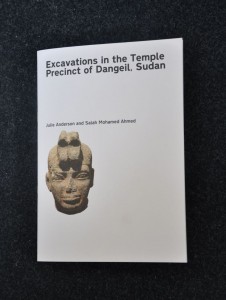
Excavations in the Temple Precinct of Dangeil, Sudan

This recently published eBook by Julie Anderson and Salah Mohamed Ahmed describes the progress of the Berber-Abidiya Archaeological Project in Dangeil, Sudan. Julie is Assistant Keeper of Sudanese and Egyptian Antiquities at the British Museum and Salah works for the National Corporation for Antiquities and Museums, Sudan and the eBook was written for a conference Julie attended. It was then printed at A5 size using the bookleteer Publish and Print on Demand. Download the A3 / Ledger PDFs here.

The eBook is full of rich details about the site in Dangeil (which sounds huge – 300x400m) and the remarkable and beautiful statues and buildings they’ve uncovered there. Intriguingly the site consists of several mounds covered with fragments of red bricks, sandstone, pot shards and plaster and each mound represents a well-preserved ancient building. It’s even possible to see traces of colour left on the stones.

As well as describing the buildings there are also fascinating insights into the rituals, food, rulers and everyday life of the temple, including the information that the Kushite language, Meoitic Meroitic, is one of the few remaining languages in the world which has not yet been translated. And running all through the book are casual glimpses into the detective work of the archeologist.

The idea is that Salah will now translate the eBook into Arabic so it can be distributed to schools around the archeological site to help them understand what’s going on and what has been uncovered. Which would be very exciting for bookleteer because that would allow us to produce our first eBook using the Arabic font and right-to-left reading that we worked so hard to include!