Categories
publishing on demand

Introducing the eBook Observer

Proboscis have commissioned me to do some research into the eBooks and how they have been used in the past by all sorts of different people and organisations. As part of the research, I created an eBook of my own – the eBook Observer – to help me conduct the interviews. I’ve already had the chance to interview a few people and will be posting profiles of cases in the coming weeks.

I’ll also be posting some of my ideas about my ongoing research on eBooks and the other resources available on Bookleteer. My personal interest on the subject of the eBooks began to take shape while conducting some research on a previous Proboscis project called Snout (read Measure Once, Cut Twice here) . It got me wondering about how people who work in cultural organisations create and disseminate information about their work. This is a particularly interesting challenge because, for the most part, the production, distribution and dissemination of information by and about arts organisations has taken-on negative connotations.

For example, there is a growing (and entirely credible) perception that publicly funded arts and creative organisations in the UK and elsewhere are facing pressure from government stakeholders and other funding bodies to “instrumentalise” and “deliver value for money” rather than focus on the work of making art. In an article entitled Auditing Culture (2004) Eleonora Belfiore claims that arts organisations “have found themselves forced to turn to the “rationalised rituals of inspection”” as the result of a “legitimacy void caused by the the erosion of cultural authority that followed the diffusion of theories of cultural relativism” (Belfirore 2004: 195). In other words, arts organisations have had to get better at generating reams of information that articulate and justify organisational aims and objectives that are consistent with the aims and objectives of stakeholders while also delivering on their promises to “be more inclusive” or “encourage audience participation”.

But the problem with this view is that this information is only generated for the benefit of funding bodies and without any meaningful ties to the actual work being done within these arts organisations. I would prefer to think about this kind of work as information practices rather than as “measuring impact” or as “providing evidence”. Once we move past framing this work within the intentions articulated by policy or funding bodies, it is possible to understand the creation and circulation of information as a practice; what Leah Lievrouw calls informing-as-praxis. That is: examining how the work of producing, distributing and interpreting information as practices in themselves are embedded within particular social, political and cultural environments and developed as part of these artists’ creative work rather than simply as an obligation to funding sources or a board of directors. I’m not arguing that the pressures that Belfiore and others have identified don’t exist, rather that these pressures are part of a more complex picture of cultural and creative practices.

The eBooks and how they are designed and used by Proboscis and their collaborators represent an interesting opportunity to take a closer look at how informing-as-praxis takes place between cultural and creative organisations. I’d be interested to hear anyone’s reactions to this approach and would love to any recommendations of authors you think might be relevant.

Categories
inspiration making

Kevin Harris: eBook Treasure Hunt


eBook Treasure Hunt at Manningham library; via neighbourhoods.typepad.com

Even though the eBook Treasure Hunt took place in 2009 I hadn’t come across it until I was looking for projects for my talk at Be2camp Brum 2010 last week. I used this project to help me explain the idea that eBooks facilitate shared making. I thought it was really great and I wanted to share it with you here too.

The  eBook Treasure Hunt was designed and implemented by Kevin Harris of Local Level with Manningham Library in Bradford. The library was undergoing refurbishment and the Treasure Hunt was part of a public event to engage people with the refurbishment project and open up a period of consultation.


Completed eBook from the Treasure Hunt; via neighbourhoods.typepad.com

Treasure Hunt participants followed clues that sent them to specific spots around the library that would be affected by the refurbishment. The first clue was printed in the eBook and asked “Where are the books about Bradford?” Answers to the questions were written into the eBook and supplementary questions were designed to solicit ideas for the new building. The supplementary question for the first clue read “How else might the new library be used to celebrate Bradford and Manningham?” When they found the place in the library that held the answer participants were handed a sticky label with the next clue on. This was stuck onto a new page in the eBook.

In this post on diffusion.org.uk Kevin writes that the eBook Treasure Hunt worked well and no-one had difficulty following the clues or the instructions about where to place the sticky labels. He goes onto say that, in part, the success was because the activity took place in an ongoing mix of engagement activities and processes. Library staff were on hand at the event to hand out clues, give hints and generally smooth the process. He also wrote this post on his own blog about how the eBooks and questions were designed. I think this is such a thoughtful well-considered approach to engagement and consultation I encourage you to read the rest of the post.

As far as shared making goes I think this is a great example of how different types of making can come together in an eBook. Kevin designed the eBook and entered the content into bookleteer, librarians at Manningham then printed out the A4 eBook sheets and made them up into the A6 eBooks. Finally, the treasure hunt participants took these eNotebooks and made them unique and personal with their answers and ideas. Three types of making, one eBook!

The Manningham Library Treasure Hunt eBook is available for download here.

Categories
residencies sharing

Seven Days in Seven Dials – eBooks


From Seven Days in Seven Dials: A week in the life of London’s Cultural Quarters

About a month ago I mentioned that Alice was spending the week in Covent Garden as part of the Seven Days in Seven Dials project organised by Dan Thompson of the Empty Shops Network. For a week ten artists and thirty young people employed on placements in some of London’s leading cultural institutions used 18 Short’s Gardens as a studio. During the week the group explored the area gathering local stories, histories and connections and captured a snapshot of life in Seven Dials in film, sound, photography and writing.

Three books made by participants in the project are now available to download at diffusion.org.uk.

Seven Days in Seven Dials: A week in the life of London’s Cultural Quarters, documents the project and its workshops describing the partners, artists and participants. Snapshots of the area, photographs of the making of the Seven Streets in Seven Dials film, notes and sights from A Walk Round the Cultural Quarter and pictures of the recording of the audio tour come together to give a sense of a lively area and action-packed week.


Photographs by Amelia Martin, From Seven Days in Seven Dials: Photography

Seven Days in Seven Dials: Photography shows work from the photography workshop. Photographs of the area taken by 8 workshop participants show details of architecture, food, people and signs.


Map and sights from The Alternative, Whistle Stop Tour of the West End Cultural Quarter

The Alternative, Whistle Stop Tour of the West End Cultural Quarter acts as a guide book to the area and takes you on a tour of the Culture Quarter. Written by participants the eBook combines photographs, navigational directions and local trivia including financial scandals, martinis and phone boxes.

The Seven Streets in Seven Dials film and podcasts of the audiotour can be heard on www.emptyshopsradio.com

Categories
examples publishing on demand

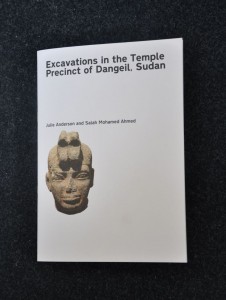
Excavations in the Temple Precinct of Dangeil, Sudan

This recently published eBook by Julie Anderson and Salah Mohamed Ahmed describes the progress of the Berber-Abidiya Archaeological Project in Dangeil, Sudan. Julie is Assistant Keeper of Sudanese and Egyptian Antiquities at the British Museum and Salah works for the National Corporation for Antiquities and Museums, Sudan and the eBook was written for a conference Julie attended. It was then printed at A5 size using the bookleteer Publish and Print on Demand. Download the A3 / Ledger PDFs here.

The eBook is full of rich details about the site in Dangeil (which sounds huge – 300x400m) and the remarkable and beautiful statues and buildings they’ve uncovered there. Intriguingly the site consists of several mounds covered with fragments of red bricks, sandstone, pot shards and plaster and each mound represents a well-preserved ancient building. It’s even possible to see traces of colour left on the stones.

As well as describing the buildings there are also fascinating insights into the rituals, food, rulers and everyday life of the temple, including the information that the Kushite language, Meoitic Meroitic, is one of the few remaining languages in the world which has not yet been translated. And running all through the book are casual glimpses into the detective work of the archeologist.

The idea is that Salah will now translate the eBook into Arabic so it can be distributed to schools around the archeological site to help them understand what’s going on and what has been uncovered. Which would be very exciting for bookleteer because that would allow us to produce our first eBook using the Arabic font and right-to-left reading that we worked so hard to include!

Categories
examples

Cosmo china

Last week Proboscis got back a delivery of PPOD books commissioned by Cosmo China in Bloomsbury, London.  The book commemorates 20 years of Cosmo China and its artists. The shop was begun by Josie Firmin and Christopher Stangeways and produces handpainted ceramics. During it’s lifetime three of Josie’s sisters have painted china for Cosmo (and continue to do so!) as has Josie’s dad, Peter Firmin, who’s perhaps better known as the creator of Bagpuss along with Oliver Postgate.


Pages for Josie Firmin and Peter Firmin from Cosmo China PPOD book

For the anniversary of Cosmo China 20 artists were asked to paint a plate and the book celebrates these special plates and the artists who created them. My favourite part of the book though is the front cover which uses the new attribute of bookleteer that allows you to have a full-cover image and features an illustration of the Cosmo China shop front.

The PPOD book is going to be sold in Cosmo China however because it was made on bookleteer you can download your own copy from diffusion.org.uk.

Categories
inspiration

Alice Angus: 12 Month Schedule

This 12 Month Schedule by Alice is my new favourite eBook. It has one month per page with pages for notes  and every page is decorated with illustrations by Alice. It’s designed as a notebook to carry around and use as a way to keep yourself organised, jot down ideas or make sketches. But seriously, could you bring yourself to write on top of Alice’s amazing drawings??

Cover image (from In Good Heart series)

The Schedule eBook can be downloaded at diffusion.org.uk. And if you have access to an A3 printer then you are even luckier because you can make it up at the new A5 size and enjoy the illustrations at twice the size (or have twice the room for making notes..).

If you want to see more detail of the pictures check out Alice’s Flickr stream.

Categories
examples

Bev Carter: Umulogho -> Watford


Schoolchildren in Umulogho; Schoolchildren in Watford

Writing yesterday about the importance of the tangible paper form of bookleteer reminded me of the A Little Something About Me project by Bev Carter carried out in 2007 – 2009 as part of Proboscis’ Generator Case Studies Residency Programme.

Bev wanted to make connections between her local school in England and the schoolchildren in Umulogho village, Imo state, Nigeria and the eBooks provided her with a way to do this.

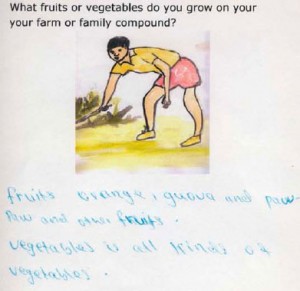
The first eBook of the project, ‘A Little Something About Me‘, contained paintings, pictures and information by the students of the local school in Umulogho. The children were asked to write ‘a little something about me’ describing what learning meant to them, their hopes, fears, likes, dislikes etc. These eBooks were brought back to the UK and taken into Bev’s local school where the British children read and responded to the Umulogho eBooks helping to devise the questions for a second eBook called ‘Kedu? How Are You?‘ which was made online then printed out and sent out to Umologho early in 2008.


From Kedu? How Are You? eBook: Questions about Umulogho by British schoolchildren illustrated with pictures by students in Umulogho from the A Little Something About Me eBooks

The ‘Kedu? How Are You?‘ eBook (Kedu means ‘How are you? in Igbo, the main language spoken in Umulogho Village) was designed as a notebook to be completed by the children in Umulogho, responding to questions asked about them and their lives by British schoolchildren. Filling in the eBook also enabled the children of Umulogho to ask questions of the children in Watford such as ‘what seasons do you have in England?’ and ‘what religions do you have?’


Response to the Kedu? How Are You? eBook by students in Umulogho

In October 2008 the completed Kedu eBooks were taken back to the school in Watford that had asked the original questions. The students were delighted to see the answers to their questions, such as ‘are there any crocodiles in the village stream?’ (some Umulogho students had seen some and others hadn’t) and got the students talking about the differences between the everyday lives of the Umulogho children and their own – for example, what time they wake up in the morning and what they do before school as most students in Umulogho were awake by 5.30 am and had gone to the village stream and back to collect water before going to school.


Response to the Kedu? How Are You? eBook by students in Umulogho

Even though the school in Umulogho doesn’t yet have a computer or internet access, it was still possible to send and receive paper copies of the eBooks, and by scanning in the completed eBooks the results could be shared online. In this way a conversation was able to be held across continents, cultures and technological formats.

Read more about the project and download the Umulogho eBooks at diffusion.org.uk

Categories
events

Seven Days in Seven Dials

This week bookleteer has been supporting the project Seven Days in Seven Dials: a week in the life of London’s Culture Quarters organised by Dan Thompson of the Empty Shops Network. Over the past days more than 30 young staff of 9 arts organisations based in Seven Dials, Covent Garden, London have been working to put together a temporary exhibition at 18 Shorts Gardens. The exhibition opens tomorrow (Saturday 10 July 2010) and runs until Friday 23 July.

Working with professional podcasters, photographers and artists the participants have been exploring the history of the area, cultural and historical links between the organisations involved in the project, and individual experiences of the participant’s day-to-day activities within their organisations. There is a short video on YouTube that gives an idea of the work they’ve been doing and the fun they’ve been having.

Alice has been in Seven Dials all week along with Karine and Shalene from Proboscis to show participants how to use bookleteer and helping them transform their material into eBooks and StoryCubes.

Read more about the project on artistsandmakers.com and see pictures of it on Dan’s Flickr stream.

Categories
pitch up & publish

Report Back on PU&P 10: Augmented Reading

Pitch Up Publish 10: Augmented Reading took place last Thursday and thanks to our excellent participants I had a fantastic afternoon. Alan Chamberlain from Mixed Reality Lab, David Crowley and Jeremy Millar from the RCA, James Bridle and Josh, Rob and Fabia from getmorelocal were knowledgable, inspiring, provocative and entertaining and I ended the afternoon with more questions than answers and hope that we can get together for another attempt to unravel the potential of augmented reading in the future!


Plenty of arm waving during discussions – got to be a good sign!

Each of the participants had their own take on what counts as augmented reading and it was great that this covered online and offline, technological and no-tech concepts. Discussions around questions of whether augmenting written text with audio, video or intereactive content augments or diminishes the reading experience, what role do books-as-objects play in our life as we move towards electronic readers and iPhone apps and how much we can expect readers to construct their own reading experience were fascinating and opened up new ways for me to think about books, their place in our lives and authoring and reading.


Getting hands-on and exploring augmented reading through a bookleteer project that combined eBooks, StoryCubes, Second Life and QR codes

One of the most interesting conversations for me was hearing everyone’s ideas about the bookleteer eBooks and StoryCubes and how these might be used to augment the creation, reading and symbolism of books and text. We talked a lot about collaborative construction of stories and text especially how the StoryCubes hide some stories at the same time as they allow you to reveal others and considered how bookleteer might allow groups to collaboratively produce eBooks. This was such an intriguing question that we’re currently trying to figure it out as we collaborate with the Augmented Reading participants to produce an eBook of our cumulative notes. I’ll let you know how it turns out.. 

Stripes rule! But checks are pretty cool too..

(All photos by Karine and Shalene – good work girls!)

Categories
pitch up & publish

Private PU&P for Brunel Creative Writing Students


Tony and the students from Brunel getting to grips with bookleteer

It was a busy week in the studio last week. Thursday was PU&P 10: Augmented Reading which I’ll write about soon and on Wednesday we hosted a private PU&P for Tony White and his creative writing students from Brunel University.

Tony has been working with the Brunel students to encourage the use of writing as a way of understanding different disciplines. The students have been given the task of producing a piece of work inspired either by the working-class social history archive at Brunel University or by conversation and encounter with a person working in a different discipline. Wednesday gave them the opportunity to visit the studio and play with Bookleteer which is the format they will use to present these pieces of writing. I’m looking forward to seeing what they produce.

Tony is an old friend of Proboscis and an experienced bookleteer. In the summer of 2009 he created a  series of eBooks as part of the Balkanising Bloomsbury project while he was writer in residence at the UCL School of Slavonic and East European Studies (SSEES) supported by the Leverhulme Trust through their artists in residence programme. The story for Balkanising Bloomsbury was created by cutting up, remixing and re-narrativising fragments from various sources including the Sydney Morning Herald, transcripts from the trial of Slobodan Milosevic at the International Criminal Tribunal for the Former Yugoslavia (ICTY) and the Richard Burton translation of The Book of the Thousand Nights and One Night. You can find the Balkanising Bloomsbury eBooks on diffusion.org.uk.